AmigaOS
1985 → today · Independent
The operating system of Commodore's Amiga, launched in July 1985.1 It ran several programs at once,2 and is still sold as of November 2026.6
Info only Sources
- Launched
- 23 July 1985, with the Amiga1
- Made by
- Commodore2
- Desktop
- Workbench, 640 × 200 dots in 4 colors2
- Newest versions
- AmigaOS 3.2 and 4.1, as of November 20266
A launch with Andy Warhol
Commodore launched the Amiga on 23 July 1985 at Lincoln Center in New York, as a "multi-media" computer for creative work.1 On stage, the artist Andy Warhol changed the colors of a digitized photo of the singer Debbie Harry.1 Three custom chips handled graphics, sound, and input and output, and colors came from a palette of 4,096.2 The Amiga cost $1,295, plus a monitor or TV set.2
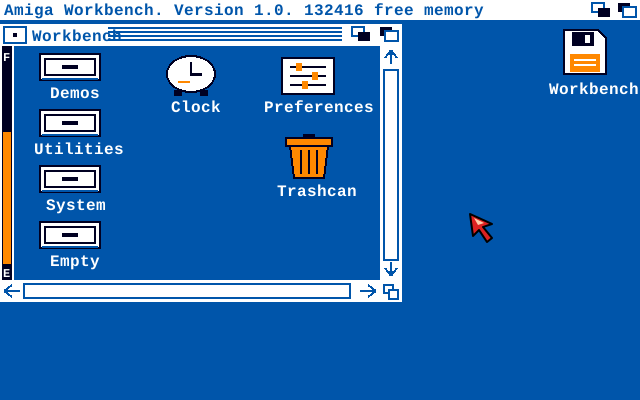
Workbench: many programs at once
The desktop was called Workbench. Programs were tools, documents were projects, folders were drawers, and there was a trash can.2 Several programs could run at the same time in overlapping windows; the one you clicked received your typing.2 Carl Sassenrath designed this multitasking system.4 For typing commands, there was also a command line.3
))
After Commodore
On 29 April 1994, Commodore said it was going out of business.5 AmigaOS lived on. As of November 2026, Hyperion Entertainment sells AmigaOS 3.2 for classic Amigas and AmigaOS 4.1 for machines such as the X5000. It says it is finishing versions 3.3 and 4.2.6
))