Haiku
2001 → today · Independent
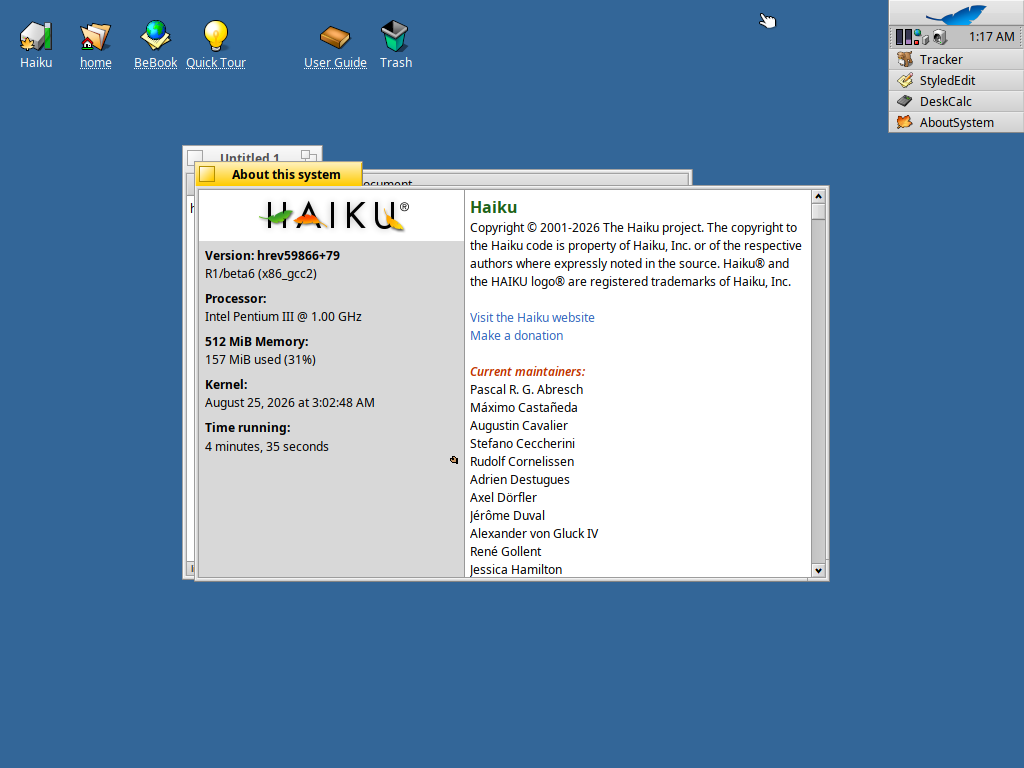
A free, open-source system for personal computers, inspired by BeOS.6 The project began in 2001;1 as of November 2026 it is in beta.4
- Project started
- 18 August 2001, as OpenBeOS1
- First release
- R1 Alpha 1, 14 September 20091
- Newest release
- R1/beta6, 26 August 2026 (as of November 2026)4
Picking up after BeOS
Be Inc., started by former Apple executive Jean-Louis Gassée, made an operating system called BeOS.2 In August 2001, Palm agreed to buy BeOS and Be's other technology for $11 million in Palm shares.2 That same month, on 18 August, volunteers started OpenBeOS to build a free system like it.1, 3 In 2004 the project took a new name, Haiku, to avoid trademark problems.1, 3
Yellow tabs and the Deskbar
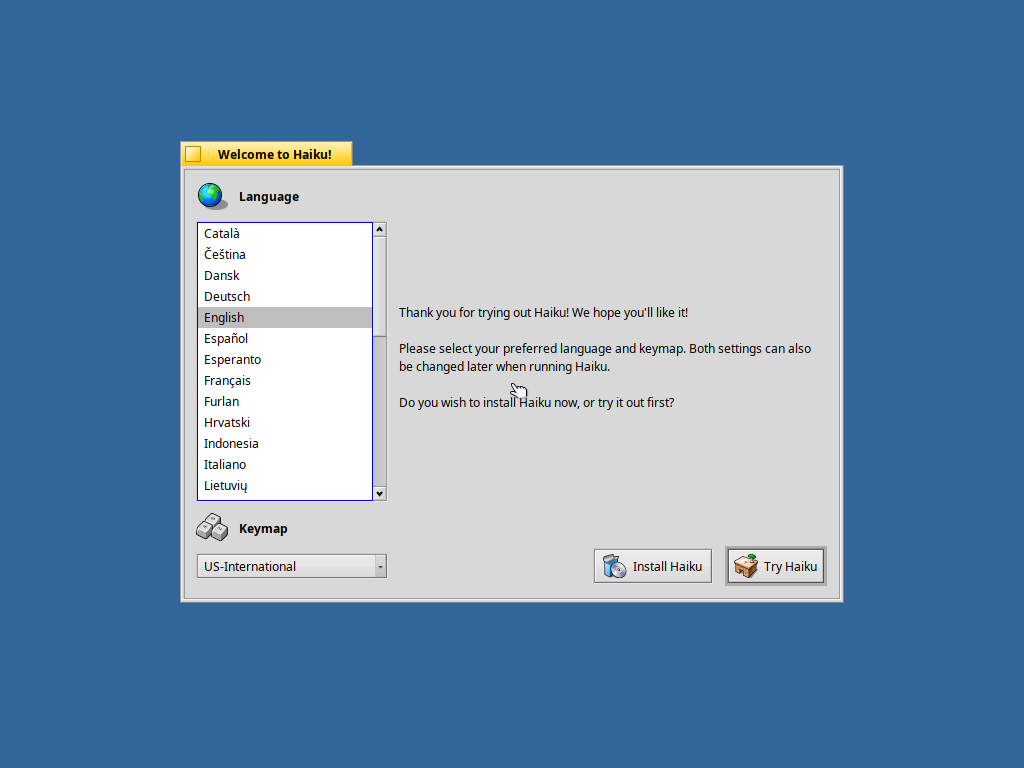
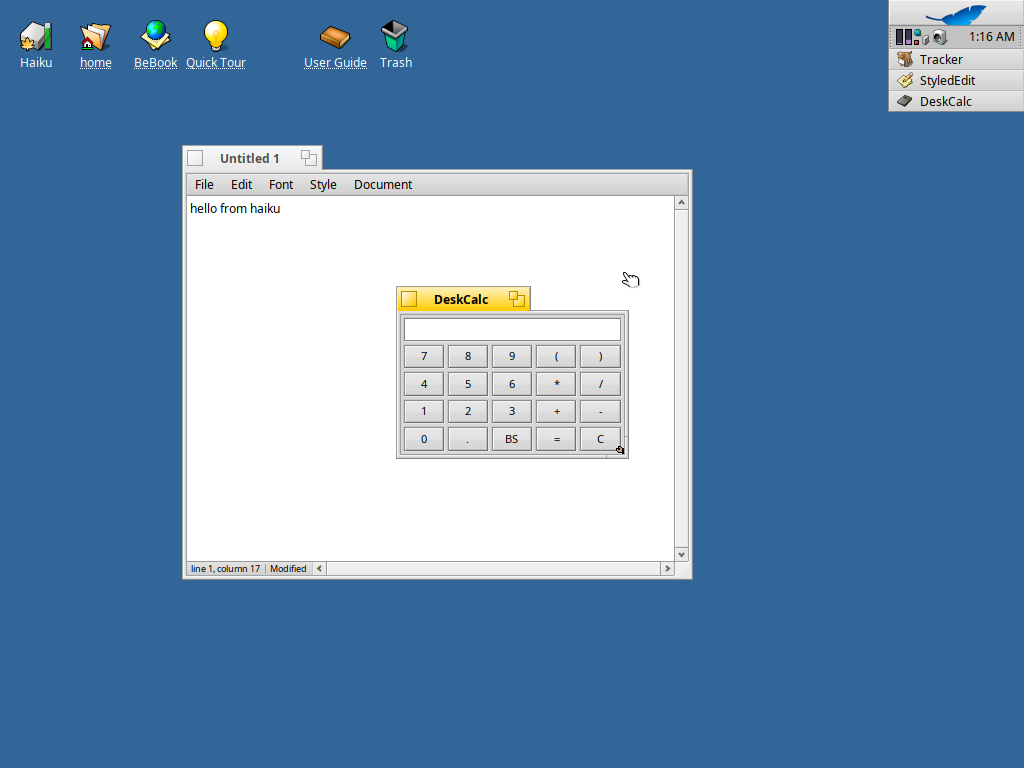
Instead of a full-width title bar, each Haiku window has a small yellow tab. You can slide it along the window's top edge and use it to stack windows together.5 The Deskbar works as Haiku's start menu and taskbar.5 Tracker, the file manager, and the Deskbar are the only BeOS code in Haiku: Be released them as open source in 2001.3 The 32-bit Haiku can still run programs made for BeOS R5.3
Still in beta
Haiku R1 Alpha 1 came out on 14 September 2009, and the first beta in September 2018.1 As of November 2026, the newest release is R1/beta6, from 26 August 2026, about a week after Haiku's 25th birthday.4 One team writes the whole system, from the kernel and drivers to the desktop apps.6