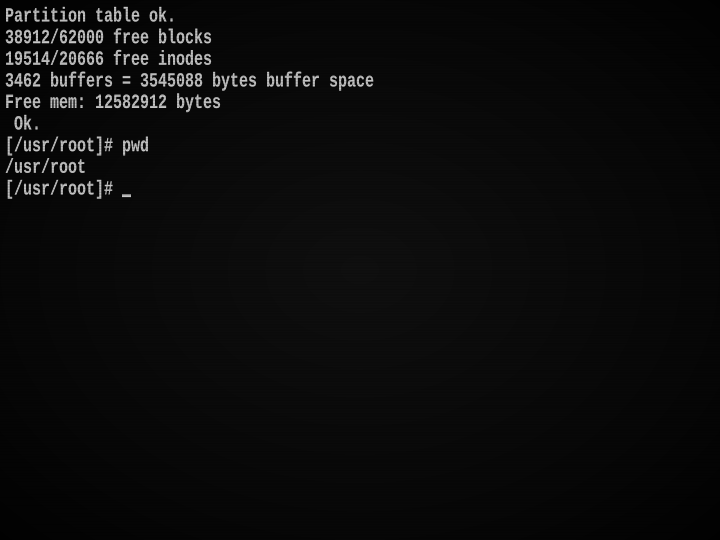
Unix
1969 → today · Linux & Unix
Ken Thompson and Dennis Ritchie began Unix at Bell Labs in 1969.1, 2 Bell Labs calls Linux its most popular descendant.2
Info only Sources
- Work began
- Summer 1969, at Bell Labs2
- Created by
- Ken Thompson and Dennis Ritchie2
- First manual
- 3 November 19713
- Rewritten in C
- 19731
A small system on a spare computer
In 1969, Bell Labs was pulling out of Multics, a big time-sharing project that had run into problems.1, 2 Ken Thompson, Dennis Ritchie and a few colleagues wanted to keep a shared system "around which a fellowship could form".1 Thompson found a little-used PDP-7 and wrote a file system, small programs to copy, print, edit and delete files, and a shell for typing commands.1 In 1970, Brian Kernighan suggested the name Unix, a pun on Multics.1
))
Typing on paper
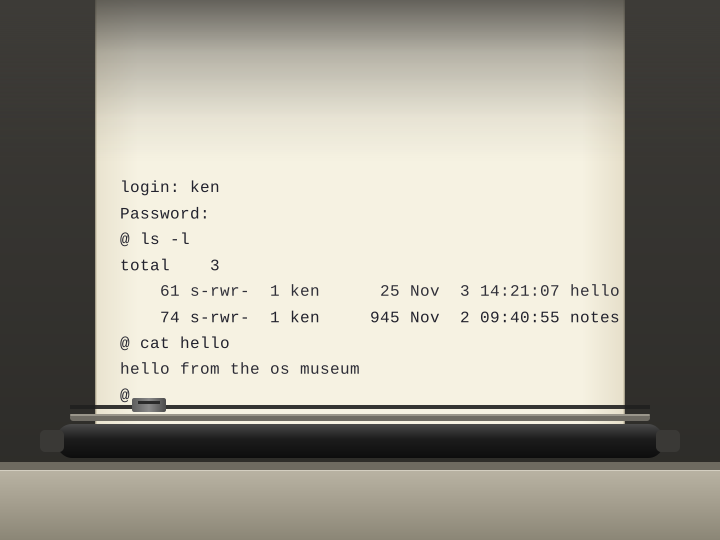
The first Unix manual, from November 1971, was typed on a Model 37 Teletype, a terminal that printed with ink and hammers on paper.3 In the second half of 1971, three typists from the patent department used Unix all day to prepare patent applications.1 In 1972, at Doug McIlroy's urging, pipes were added: the output of one program could flow straight into the next.1
Where it is today
In 1973, the core of Unix was rewritten in the new C language, and the system took its modern form.1 By 1974 a copy was running at the University of California, Berkeley, where it grew into a separate version.4 Nokia Bell Labs calls Linux the most popular descendant of Unix, and says it powers the vast majority of servers.2